ChatGPT Work analytics: Connecting AI usage to business outcomes
OpenAI explains Admin Console analytics for usage, spend, task categories, and Codex contributions, plus ways to connect product activity to business measures.
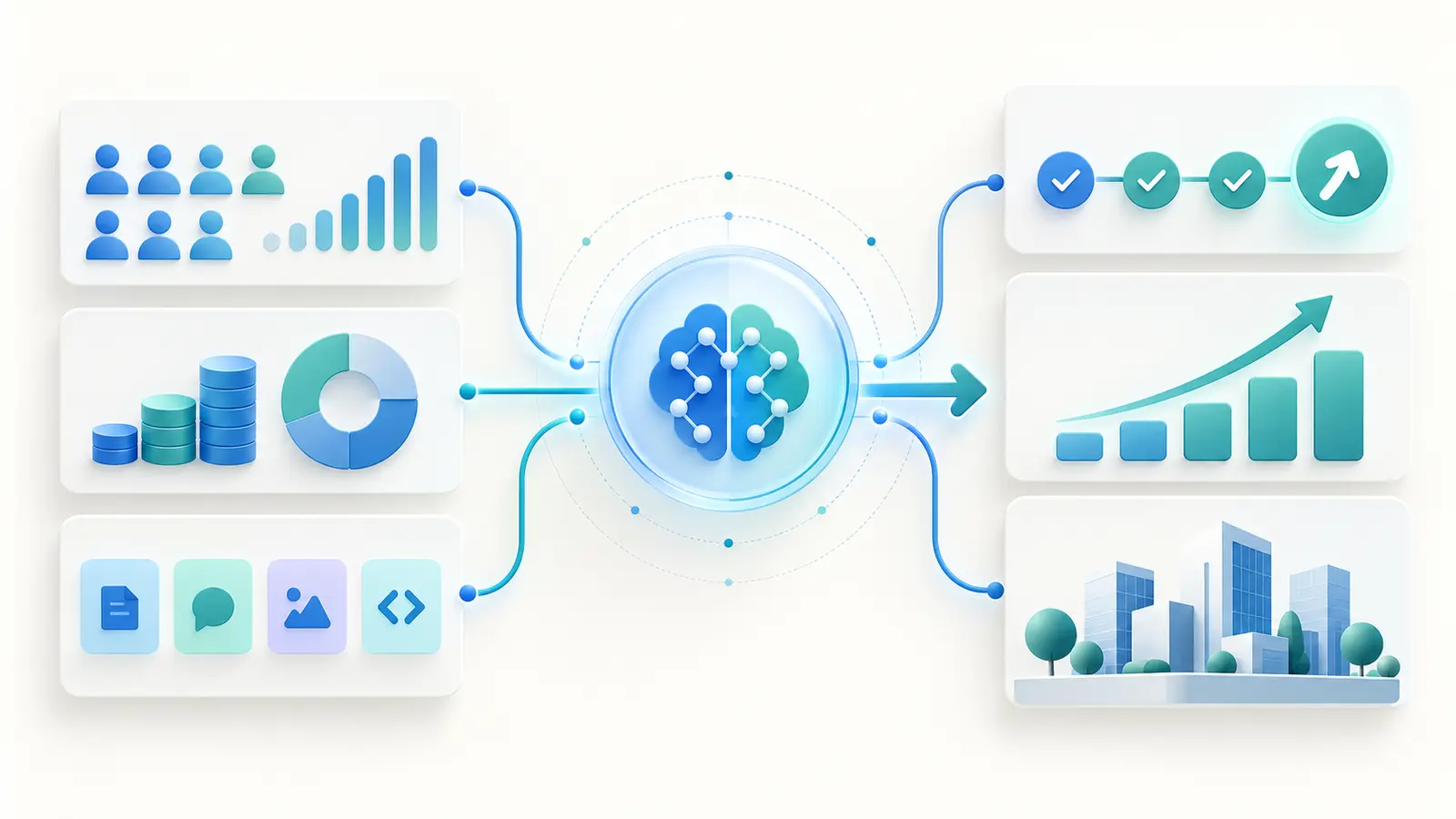
ChatGPT Work and Codex administrators can review active users, credits, token usage, the kinds of work AI supports, and Codex-related code outcomes, then extend reporting through the Admin plugin or Admin API. Usage is not ROI by itself: each organization still needs baselines for quality, correction time, and workflow outcomes.
Best for: Executives, IT and AI governance teams, finance leaders, and engineering organizations that need evidence behind AI spending.Points for a team pilot
What changed
OpenAI brings Usage, Insights, and Outcomes views together in the ChatGPT Admin Console. Administrators can review adoption by group, identify which tasks consume credits, and connect Codex activity with merged commits and code review. The Admin plugin can summarize trends, while the Admin API can feed internal dashboards.
Availability and limits
The announcement discusses analytics across ChatGPT Work and Codex but does not provide a plan-by-plan entitlement table. Confirm the menus and administrator permissions in the target workspace before procurement or delivery commitments. The task classifier is an investigative starting point, not proof that a workflow improved.
Implications for Thai organizations
A monthly review between IT and process owners can connect adoption with sales preparation, service, or engineering outcomes. Measure the full cycle until a human accepts the work, including checking and corrections. Avoid using message count, lines of code, or active users as a standalone KPI.
How to read the source's numbers
OpenAI includes a hypothetical ROI model and customer examples, explicitly labeling the ROI figures as illustrative. They are not estimates for a Thai organization, so TechTouch does not present them as promised results or a procurement baseline.
Dates and evidence
OpenAI published the article and described the available Admin Console capabilities on September 16, 2026. No separate source-update date was found.
Before getting started
- Name the workflow and outcome owner before the pilot
- Capture time, quality, and cost baselines
- Verify access to Usage, Insights, and Outcomes
- Set a policy for task-classifier data
- Include review, correction, and training time
- Limit Admin API and dashboard access to necessary data
Frequently asked questions
Can usage data prove ROI?
No. Usage shows adoption and resource consumption. ROI requires workflow outcomes, total cost, and quality confirmed by the business owner.
Does OpenAI train on business data?
OpenAI states that business data is not used to train its models by default. Organizations should still review contracts, retention, admin access, and internal policy.
Sources used for verification
Vendor facts are separated from TechTouch guidance. Features, pricing, and commercial terms may change, so confirm the latest information at the time of purchase.